
One Thing Leaders Can’t Ignore

If we examine the life and ministry of Jesus, we notice a counter-intuitive strategy. While He preached to the multitudes, healed the crowds, and feed the masses, He spent the vast majority of His time pouring His life into a select group of disciples. He knew that for the mission to survive and expand beyond His earthly ministry, He couldn’t just attract followers; He had to reproduce disciples. He didn’t measure success by the size of the crowd on the hillside, but by the capacity of the disciples in the boat and on mission with Him.
As church planters and ministry leaders, we often find ourselves caught in the “tyranny of the urgent.” Sunday is always coming. There are sermons to write, logistics to manage, and relational fires to put out. In the midst of this whirlwind, leadership development often gets pushed to the back burner, viewed as a luxury we will get to “someday” when things slow down. But the hard truth is – things never slow down. If we wait for the perfect time to develop leaders, we will never do it.
When a leader fails to develop others, they inevitably become the lid of the organization. The church can only grow as wide as the leader’s personal capacity to care and manage. This is the “Hero Trap”—where the pastor does the work of the ministry while the congregation watches. But Ephesians 4 paints a different picture: leaders are called to equip the saints for the work of ministry.
Developing leaders isn’t about filling volunteer slots or getting tasks done; it’s a form of discipleship. It champions multiplication over addition. When you lead a follower, you add one person to the Kingdom. When you develop a leader, you multiply your influence and create a legacy that outlasts you. This month, we want to challenge you to shift your focus from gathering a crowd to building a core. The resources below are designed to help you build a culture where leadership development is not an event, but the very oxygen your church breathes. Enjoy!
-Patrick Bradley, Director of Operations
March 2026 – Content
- Mastering The Art of Leadership Development
- Leadership Multiplication Strategy Template
- Developing Leaders in Your Church
- Residency Highlight: Chris Flathers
- Assessment & Boot Camp
Mastering The Art of Leadership Development
If you are looking for a guide on how to build a leadership pipeline from scratch, look no further than Mac Lake. Mac is a leading voice in church leadership development, having helped hundreds of churches build systems that multiply healthy leaders. His book, The Multiplication Effect, is a must-read for any planter, but his online resources – not the least of which being his YouTube Channel – are equally valuable. He breaks down the complexity of “leadership development” into actionable steps, helping you move people from volunteers to leaders to multipliers.
- Check out his resources: Mac Lake Online
Leadership Multiplication Strategy Template
One of the biggest hurdles when developing leaders is knowing where to start. Too often, we rely on a “hope strategy”—hoping that if we run good programs, leaders will magically emerge. But hope is not a strategy. To build a culture of multiplication, you need a plan that is intentional, reproducible, and specific to your context.
You don’t have to reinvent the wheel. Passion for Planting has developed a comprehensive Leadership Multiplication Strategy template available for free. This isn’t just a generic form; it is a strategic tool designed to help you wrestle with critical questions about identifying, inviting, training, and coaching growing leaders.
This resource helps you move from accidental leadership placement to intentional development, covering every stage of the pipeline. Download it today, customize it for your church, and stop leaving your legacy to chance.
Developing Leaders in Your Church
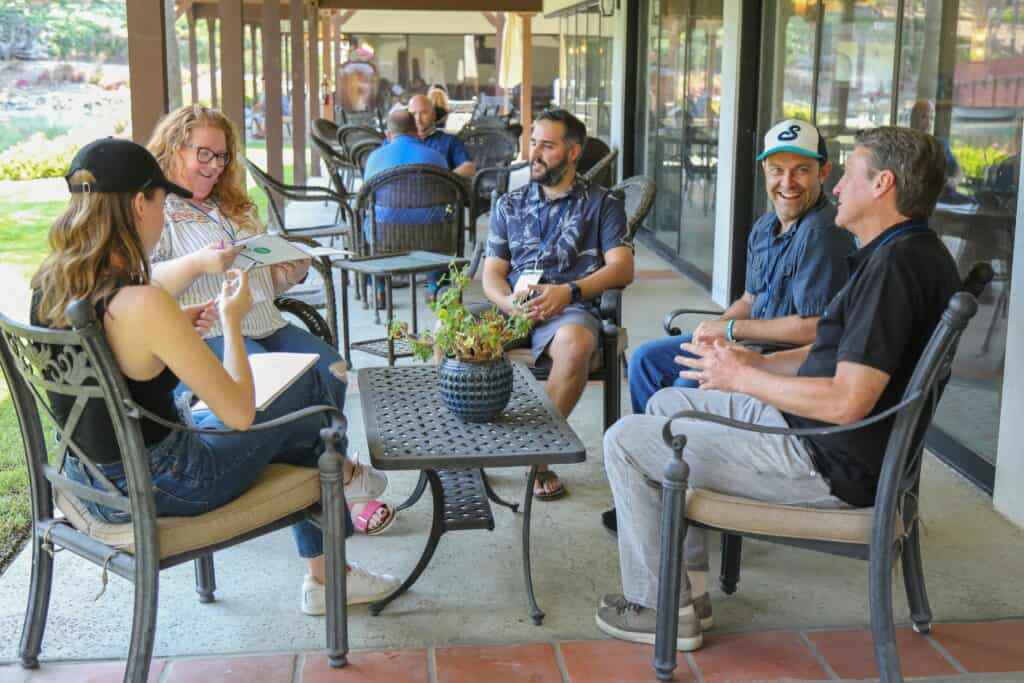
If you have thirty minutes this week, we highly recommend digesting the content of this video podcast on Developing Leaders in Your Church. It is all too easy to view leadership development as just another program to run—a mechanical process of filling holes in a roster. However, true development is organic, relational, and intentional.
In this episode of the Grow Leader Podcast, you will find practical insights on how to shift your primary identity from being a “doer” of ministry to a “developer” of people. We suggest watching this together with your staff or key volunteer team. Use it as a catalyst to discuss how you can move away from transactional recruiting and toward transformational discipleship. The long-term health of your church isn’t just determined by how many people attend, but by how many are being empowered to lead.
- Watch the video: Developing Leaders in Your Church
Residency Spotlight: Chris Flathers & Connect Church

We love seeing our residency alumni thriving! Chris Flathers, a participant in our 2018-2019 cohort, planted Connect Church in Lone Tree, CO, with a DNA of multiplication. Chris doesn’t just lead his church; he actively coaches other leaders to build their own leadership pipelines with the Multiply Group. He has even integrated this training directly into the Connect Church App, where he shares training modules that you can use to develop your own team. It’s a fantastic example of a planter giving back to the Kingdom.
- Get the App & Learn More: Connect Church Website
Assessment & Boot Camp
Healthy, reproducing churches don’t happen by accident; they are planted by healthy, reproducing leaders. The DNA of the leader determines the DNA of the church. If you want a movement that lasts, you can’t afford to guess about readiness or strategy. At Passion for Planting, we are obsessed with getting the “Who” right before we worry about the “How.”
Assess Calling and Readiness: Is the leader ready? Is their calling clear? Our Church Planter Assessment (May 4-6) provides a prayerful, rigorous evaluation to answer those questions and offer them practical next steps to take as they prepare to plant.
Equip the Mission: Is the leader’s vision clear? Is their strategy scalable? Our Church Planter Boot Camp (May 14-16) moves beyond theory. It introduces planters to the essential “how-to” systems and strategies needed to plant. And they come away with the entire P4P playbook.
Don’t just start a service. Start a legacy of reproduction.